
Event Production Compliance & Safety
Permits, insurance, structural and electrical safety, severe weather planning, and the documentation your production actually needs on show day — from the crew that builds them.
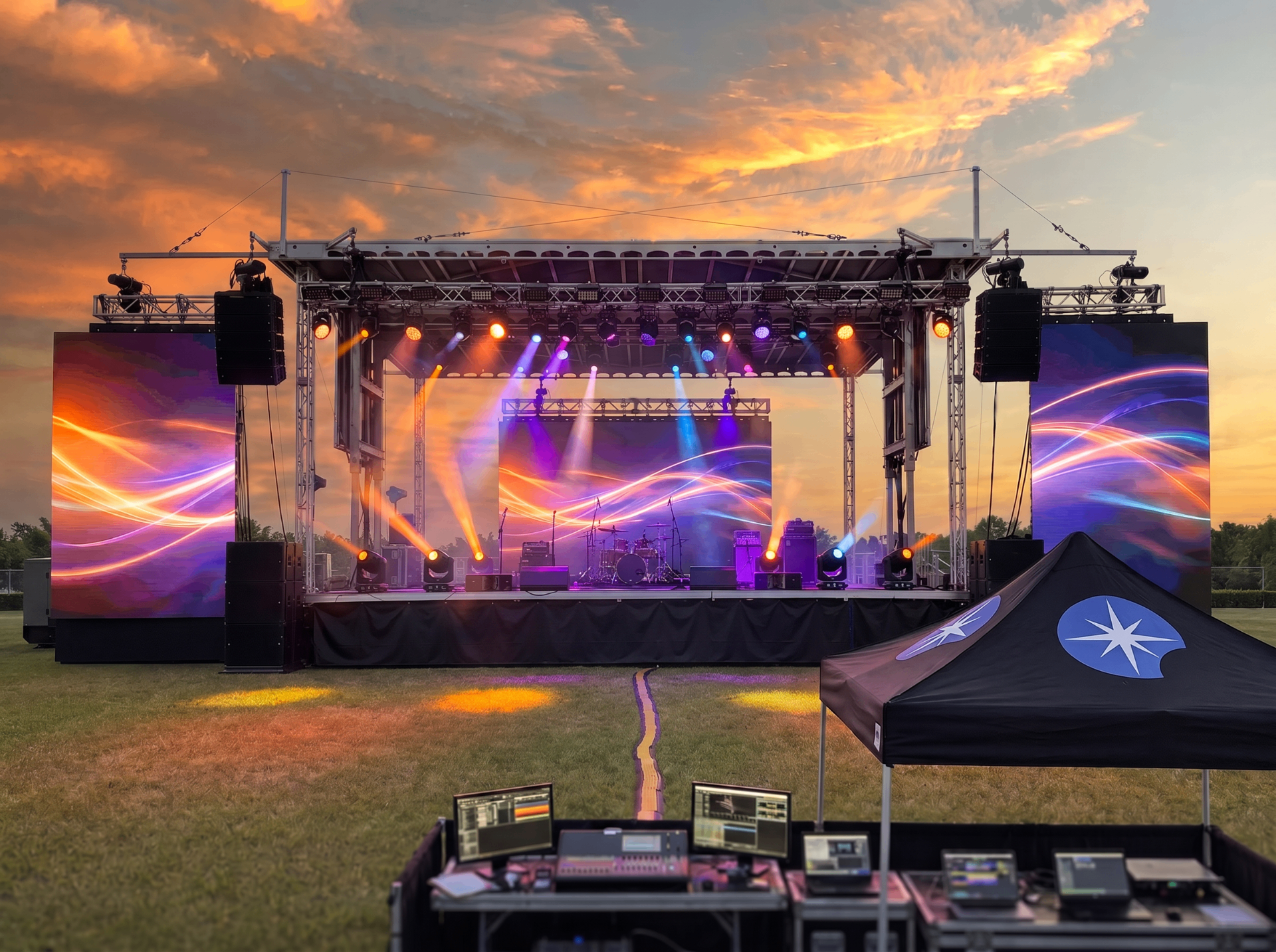
Why compliance is production, not paperwork
On paper, permits and safety plans look like admin. On show day they're the reason doors open on time — or don't. A rejected structure permit, a missing certificate of insurance, a fire marshal walkthrough that catches an unramped cable run: any one of these can push doors, trigger fines, or shut a show down mid-set. The teams that ship clean events treat compliance as a production workstream with its own timeline, owner, and deliverables — not a stack of PDFs the promoter scrambles to sign the week of.
The permit stack for an outdoor event
Every municipality is different, but most outdoor concerts and festivals need some combination of the following. Confirm the exact list with your local special-events office and start filing 8 to 10 weeks before doors.
- Special event / assembly permit — the umbrella permit for gathering the crowd. Usually the first one filed.
- Temporary structure permit — required for the stage and roof. Needs stamped engineering drawings from the stage vendor. Ask about this the same conversation you spec the stage package.
- Noise variance — needed when amplified sound runs past local curfew. Some cities require a decibel plan with FOH position and measurement points.
- Road closure / right-of-way — for street festivals, parking-lot builds spilling onto sidewalks, and any load-in that blocks a lane.
- Tent permits — for VIP, hospitality, or vendor tents above the municipal size threshold (often 400 sq ft).
- Fire marshal sign-off — walkthrough of egress paths, extinguisher placement, pyrotechnics if any, and generator placement.
- Electrical inspection — required when temporary power exceeds a threshold or when tying into shore power at a municipal facility.
Insurance: what's yours, what's the vendor's
A common gap is assuming the production vendor's insurance covers the event. It doesn't. Vendor policies cover their gear and their crew's negligence — not the crowd, the artist, or the property. The promoter carries the event policy. Typical stack:
- General liability — $1M per occurrence / $2M aggregate is baseline; $5M+ for larger builds. Name the venue and municipality as additional insured.
- Liquor liability — required whenever alcohol is served, whether by you or a licensed vendor on your site.
- Workers' comp — for any staff or volunteers you classify as hired. Vendor crews carry their own.
- Event cancellation — protects the promoter budget against weather, artist no-show, or forced shutdown. Underrated on outdoor shows.
- Auto liability — for any vehicle you're operating on site.
Ask every vendor for a Certificate of Insurance (COI) naming the promoter and venue as additional insured before load-in. Keep them together in one folder — the venue will ask.
Structural safety — stages, roofs, and rigging
The stage and anything flown from it are the highest-risk structures on site. Every mobile stage has an engineered wind rating stamped on its drawings that defines the maximum sustained wind speed for a given roof and banner configuration. That number is the ceiling, not the operating envelope — your wind action plan should have thresholds well below it.
Typical thresholds: monitor at 25–30 mph, drop banners and side kabs at 35–40 mph, evacuate the stage at the rating minus a safety margin. For flown lighting and video, an ETCP-certified rigger signs the hang. The stage vendor provides the drawings; the promoter's site safety plan defines who calls each threshold. GPS supplies both when you book a full-production package. For sizing and permit basics, see the mobile stage planning guide.
Electrical safety and power planning
Power is where "it worked at the last show" becomes a fire. Every temporary electrical install on an event should follow NEC 590 (temporary installations) and, for entertainment specifically, NFPA 70 guidance:
- Distro run and terminated by a qualified electrician. Not a stage hand, not a runner.
- All feeder cable ramped or matted in any public or crew path. No exposed runs across walkways.
- GFCI protection on any circuit within 6 ft of water or accessible to the public.
- Generators grounded per NEC. Fuel storage a documented distance from the crowd and any ignition source.
- Audio power isolated from lighting and motor power to prevent nuisance trips and hum. See the outdoor sound & lighting guide for typical amperage draws by rig size.
Crowd, egress, and medical
Site plan owns crowd safety. Egress paths — the routes people leave by in an emergency — need to be at least twice as wide as your normal entry flow and kept clear at all times. Barricade the FOH tower and cable ramps, put security at every choke point, and stage medical within 60 seconds of the front-of-house crowd.
Most municipalities require a licensed medical provider on site above a certain attendance count. Even below it, insurers increasingly expect at least an EMT on standby. Coordinate the medical staging location on the site plan so the production crew, security, and medics all work from the same map.
Severe weather: the go / no-go plan
Every outdoor event needs a written severe weather plan with named decision-makers, trigger thresholds, and communication paths. Standard structure:
- Weather monitor — named person watching a paid weather service (not a phone app) from doors minus 4 hours through load-out.
- Trigger thresholds — wind, lightning distance, and rain rate that move the show from "monitor" to "hold" to "evacuate".
- Decision authority — one named person (usually the production manager or promoter) who owns the go/no-go call.
- Communication plan — how the call reaches the stage manager, security, medics, and the crowd.
- Shelter map — where the crowd goes if evacuation is called. Should be on the site plan and briefed to every vendor pre-show.
The National Weather Service recommends a 30/30 rule for lightning: shelter when lightning is within 6 miles (30 seconds flash-to-bang) and wait 30 minutes after the last strike before resuming.
Documentation — the show-week binder
One physical or shared binder, on site, holds everything a fire marshal, insurance adjuster, or inspector could ask for. Contents:
- Copies of every filed and approved permit.
- Certificates of Insurance from every vendor.
- Stamped engineering drawings for the stage, roof, and any flown rigging.
- Site plan with egress, medical, FOH, and vendor locations marked.
- Severe weather plan with named decision-makers and thresholds.
- Emergency contact list — venue, security, medical, all vendor crew chiefs.
- Run of show — technical and public-facing versions.
Nothing here is optional on a well-run production. The binder is what separates the shows that pass inspection at 4pm from the ones that push doors to 8:30.
Frequently asked questions
What permits do I need for an outdoor concert or festival?
The common ones are a temporary structure permit for the stage, an assembly or special event permit for the crowd, a noise variance if amplified sound runs past local curfew, and a road-closure or right-of-way permit if streets or sidewalks are affected. Larger builds may also need fire marshal sign-off, tent permits, and electrical inspections. Requirements vary by municipality — always confirm with the local jurisdiction 8 to 10 weeks out.
Who is responsible for pulling event permits — the venue, promoter, or production vendor?
The promoter or event producer is almost always the applicant of record. The venue may sign off as the property owner and the production vendor supplies stamped engineering drawings for temporary structures, but the responsibility for filing, fees, and compliance sits with the promoter. Put this in writing in the venue contract and vendor scope so there's no gap on show week.
What insurance does an event need?
At minimum, general liability with the venue and municipality named as additional insured, typically at $1M per occurrence and $2M aggregate. Larger events add liquor liability, auto liability for vehicles on site, workers' comp for any hired staff, and event cancellation coverage. Your production vendor carries their own GL and gear coverage, but that does not replace the promoter's policy.
What is a site safety plan and do I need one?
A site safety plan documents crowd flow, emergency egress, medical staging, severe weather protocols, and a chain of command for go/no-go decisions. Most municipalities require one for outdoor assemblies over a certain attendance threshold — often 500 or 1,000 people. Even when it isn't required, insurers and venues increasingly ask for one. Build it with your production vendor, security lead, and medical provider before permits are filed.
What wind speed shuts down a mobile stage?
Every stage has an engineered wind rating on its stamped drawings — typical mobile stages sit between 40 and 90 mph depending on model, banner load, and roof configuration. The wind action plan should define trigger speeds well below the max: usually a monitoring threshold, a banner-drop threshold, and a full evacuation threshold. GPS supplies the engineered numbers for the specific stage and roof configuration on your build.
Do I need a certified rigger for lighting and video?
For any flown lighting truss or video wall, yes. ETCP-certified riggers are the industry standard for entertainment rigging and most venues, insurers, and stamped structural drawings require them. The lead rigger signs off on the hang before load is applied. GPS crews include certified riggers on any build with flown gear — it's not an upsell, it's the baseline for a safe rig.
How is electrical safety handled on outdoor events?
Power distro should be run by a qualified electrician, all feeder cable ramped or covered, GFCI protection on any circuit near water or the public, and generators grounded per NEC. Audio power is typically isolated from lighting and motor power to prevent noise and nuisance trips. Your production vendor should provide a power plan showing loads, distro locations, and cable paths as part of the permit and site plan package.
What's the biggest compliance mistake new promoters make?
Filing permits too late. Temporary structure and special event permits routinely take 4 to 8 weeks to clear, and a rejected application can push doors past the announced date. Start the permit conversation the same week you sign the venue — before the artist contract if possible — and keep a written record of every submission date, reviewer contact, and approval so nothing falls through the cracks on show week.
Related guides
Pair this with the event production checklist for the week-by-week timeline, the mobile stage planning guide for sizing and wind ratings, and the outdoor sound & lighting guide for power planning.
Want a vendor that shows up permit-ready?
GPS provides stamped drawings, COIs, and site-plan support as part of every full-production package. Send your date and venue and we'll come back with a turnkey quote — usually within one business day.
Request a Quote