
Event Production Checklist
A week-by-week production timeline for concerts, festivals, and corporate events — the exact sequence the GPS crew works from so promoters don't get surprised on show day.
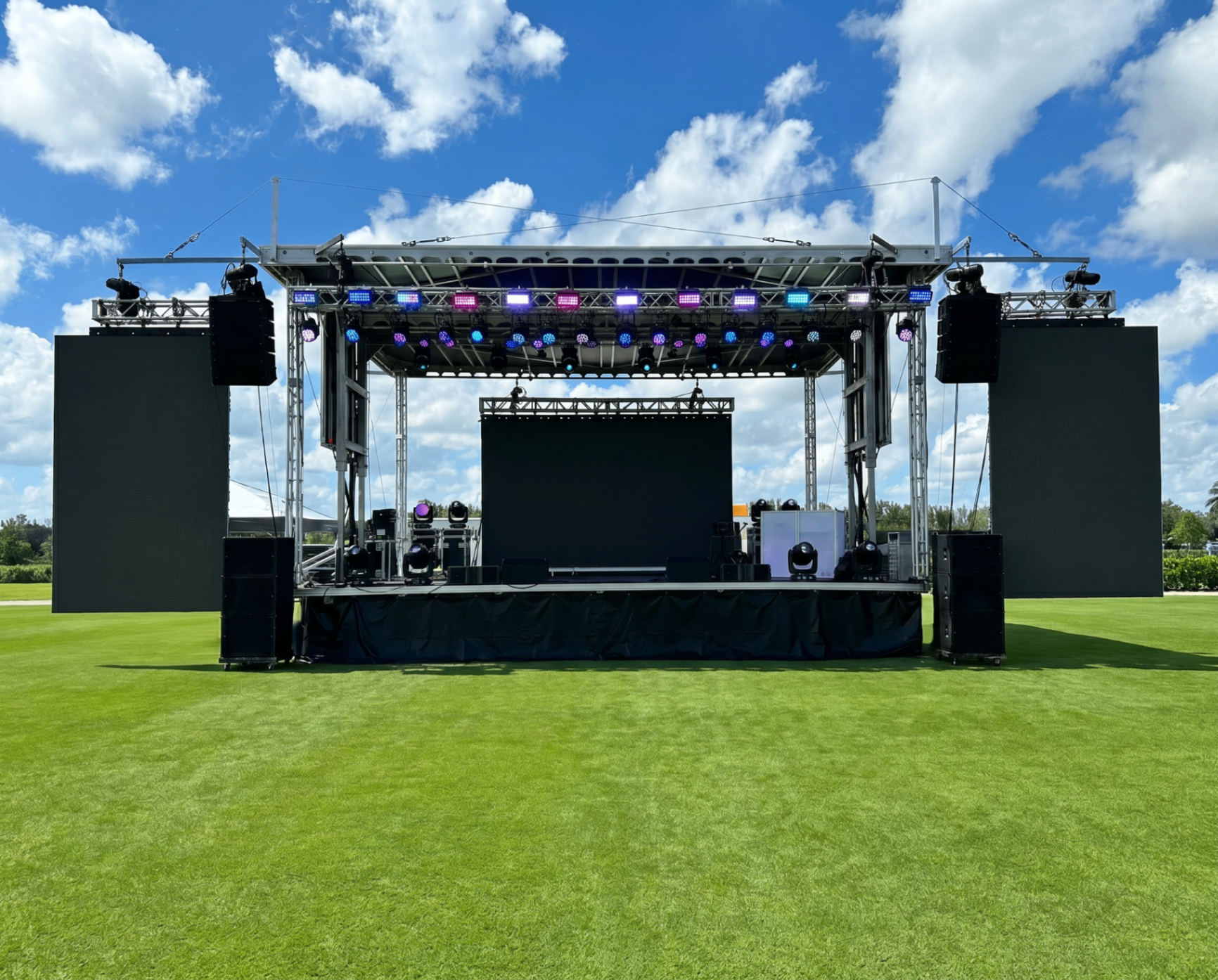
Why a timeline beats a task list
Most event production failures aren't gear failures — they're calendar failures. A stage that would've been perfect two months ago is booked; a permit that would've cleared in ten days is now the reason doors slip. The checklist below is organized by lead time, not by department, because the sequence is what actually keeps a show on the rails.
If you're still deciding on stage size, start with the mobile stage planning guide first — sizing, permits, and wind ratings live over there. Come back to this checklist once you know the shape of the build.
12–16 weeks out — Lock scope and vendors
- Confirm event date, venue, expected attendance, and headline programming.
- Draft a production budget with realistic ranges for stage, sound, lighting, video, and crew.
- Request quotes from turnkey production vendors — one contract beats four.
- Sign the artist contract only after production capacity is confirmed for the date.
- Reserve backup dates or a rain plan for outdoor events.
8–10 weeks out — Permits, insurance, and site plan
- Apply for temporary structure, assembly, noise, and road-closure permits.
- Get stamped engineering drawings from your production vendor for the permit package.
- Confirm event insurance (general liability + venue additional insured).
- Draft the site plan: stage location, FOH position, crowd flow, vendor lanes, load-in routes.
- Book power — shore power tie-in or generator — and confirm amperage with the production vendor.
4–6 weeks out — Advance the artist and confirm technical scope
- Send the artist advance packet: stage plot, input list, hospitality rider, dressing rooms.
- Cross-check the artist's technical rider against the booked production package.
- Confirm dressing rooms, catering, and hospitality lead times with the venue.
- Finalize the video content plan: playback source, IMAG cameras, content delivery format.
- Lock the run of show draft with set times, changeover windows, and cue calls.
2 weeks out — Coordinate the run of show
- Distribute the run of show to every vendor, artist rep, and venue contact.
- Confirm load-in and load-out windows in writing with the venue.
- Book runners, security, and medical staff for the show day.
- Confirm weather plan and wind-monitoring protocol for outdoor events.
- Walk the site with the production manager and stage manager if possible.
Show week — Final confirmations
- Reconfirm load-in call time with every crew and vendor by 48 hours before doors.
- Print or share the run of show, site plan, and emergency contact list.
- Confirm ice, water, and catering deliveries hit the loading dock before crew arrives.
- Do a final weather review and confirm the go/no-go decision authority.
- Charge every radio, every laptop, and every clear-com pack.
Show day — Load-in through doors
- Stage deploys and roof rigs first (2 to 4 hours).
- Audio and lighting hang in parallel (3 to 5 hours).
- Video wall build (1 to 2 hours).
- Line check, sound check, then a full run-through if schedule allows.
- Doors open only after every department has confirmed 'ready' to the stage manager.
Load-out — Break down and reconcile
- Follow the reverse load-in order: video first, then lighting, then audio, then stage.
- Confirm every piece of rented gear is accounted for before trucks leave.
- Walk the site with the venue rep for a damage check.
- Collect signed timecards from crew and comps from vendors.
- Debrief with the production manager within 72 hours while it's fresh.
Frequently asked questions
When should I start planning event production?
For a full-scale outdoor concert or festival, start production planning 12 to 16 weeks out. That gives time to lock the stage, sound, lighting, and video packages, file permits, and coordinate with the venue. Corporate events and smaller activations can move faster — 6 to 8 weeks is usually workable — but the earlier you lock scope, the more options you have on gear and crew.
What's the difference between a production manager and a stage manager?
The production manager owns the whole build — vendors, timelines, budget, and cross-vendor coordination — and is usually your single point of contact from booking through load-out. The stage manager runs the show itself: calling cues, managing artist changeovers, and keeping the run of show on time once doors open. On smaller events one person often wears both hats; on larger builds they're separate roles.
Do I need a separate vendor for sound, lighting, and video?
No — and you usually shouldn't. Booking one vendor for stage, sound, lighting, and video (a turnkey production package) means one contract, one crew chief, and gear that's already spec'd to work together. Multi-vendor builds add coordination overhead and finger-pointing when something goes wrong. GPS offers full-production packages specifically to eliminate that friction.
What permits does an outdoor event need?
It varies by municipality, but the common ones are a temporary structure permit for the stage, an assembly permit for the crowd, a noise permit if amplified sound runs late, and sometimes a road-closure or ROW permit. Your production vendor should supply stamped engineering drawings for the stage; the promoter or venue typically files the applications with the local jurisdiction.
How much production crew do I need on show day?
A typical single-stage outdoor concert build needs a stage manager, 2 audio techs (FOH and monitors), 2 lighting techs, a video tech if there's a wall, 2 to 4 riggers for the load-in, and a runner. Scale up for multi-stage festivals or long production days. Your production vendor should include a recommended crew count with the quote — not just an equipment list.
What's a run of show and who writes it?
A run of show is a minute-by-minute timeline of the event from load-in through load-out — doors, set times, changeovers, cues, and load-out windows. The promoter or event producer usually drafts the artist-facing schedule; the production manager owns the technical run of show that the crew works from. Both should be finalized 48 hours before doors and shared with every vendor.
What should the load-in schedule look like?
For a full concert build: stage deploys and roof rigs first (2 to 4 hours), then audio and lighting hang in parallel (3 to 5 hours), then video wall (1 to 2 hours), then a line check and sound check (2 hours), then a full run of show rehearsal if the schedule allows. Plan doors no earlier than 8 to 10 hours after truck arrival for a full build.
What's the biggest thing new promoters get wrong?
Underestimating load-in and load-out windows. It's easy to look at set times and forget that a full concert rig takes most of a day to build and a solid 3 to 4 hours to break down and truck out. Book your venue window with the load-in and load-out included, and confirm access hours in writing before you sign the artist contract.
Related guides
Still sizing the stage? Start with the mobile stage planning guide. For PA, coverage, lighting, and power on open-air shows, read the outdoor sound & lighting guide.
Want the GPS crew to run your production?
Send us your date, venue, and rough scope. We'll come back with a turnkey quote and a production timeline that fits your event — usually within one business day.
Request a Quote